

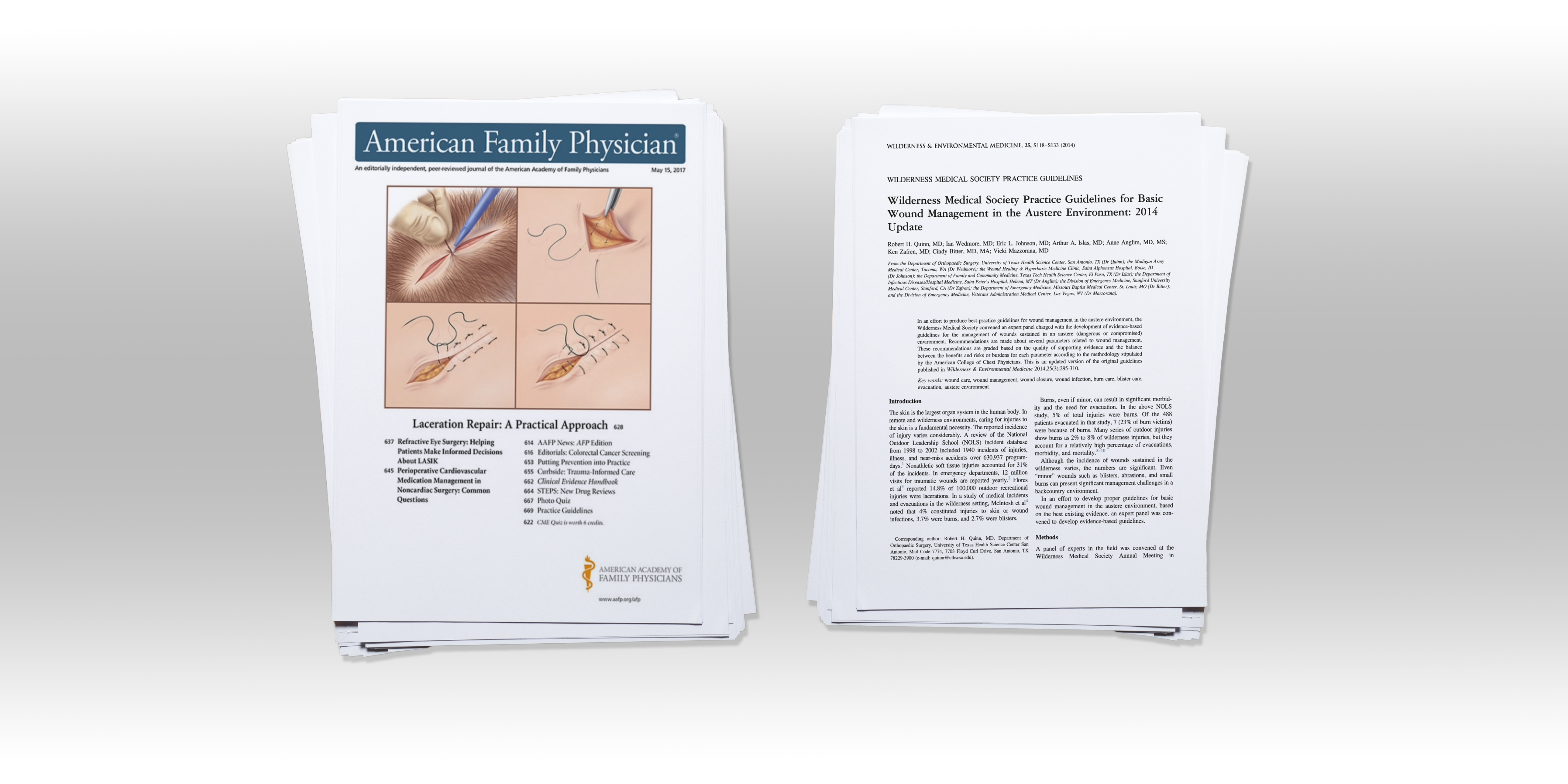
Hey everyone, doc Miles at North American Rescue. Today we're going to talk about how to evaluate a wound or a laceration, how to assess it, how to clean it, when to close it, when not to close it, and a couple different techniques to close that wound. I've got two main references that we'll be going off of that we'll post below. One is from the American Academy of Family Physicians, and the other one is from the Wilderness Medical Society.
Why Should You Close a Wound?
So the first thing that we want to talk about is why to close. In general, we want to close a wound based on cosmetic reasons, so we're going to have a better cosmetic outcome. It's going to look better if you can close that wound.
The Risk of closing a wound
Really, if you're in the wilderness or in an austere setting, there's some risks that come with wound closure. Part of the problem is if there's bacteria that are in the wound and you don't get a good rinse and a good washout, that can actually cause more problems by closing it than not closing it and leaving it open, or what's called healing by secondary intention. So if we close a wound and it's got anaerobic bacteria in it, those bacteria can grow, cause an abscess, cause cellulitis, and then lead to sepsis and death. So you really want to be careful closing a wound. And when in doubt, make sure you've got good hemostasis so it's not bleeding anymore, and you can leave that wound open until you can get to definitive care.
What Wounds Should You Leave Open?
So there's some wounds in particular that you want to be very careful and leave those wounds open and not close those. So those are wounds that are caused by something dirty in the environment. So if you've got a lot of dirt, debris, foreign matter that is in that wound, you do not want to close that wound up. You want to rinse it out as good as you can, and then get them to definitive care. So the other one that you want to be careful of is wounds that are caused by bites from humans or animals. In particular, cats are known to be pretty bad as are dogs. So those wounds can get really nasty. They can get infected easily. So those ones in general, you want to leave those ones open again, making sure that you have good hemostasis or bleeding control, and then you leave those wounds open and get them to definitive care.
When Should You Close a Wound?
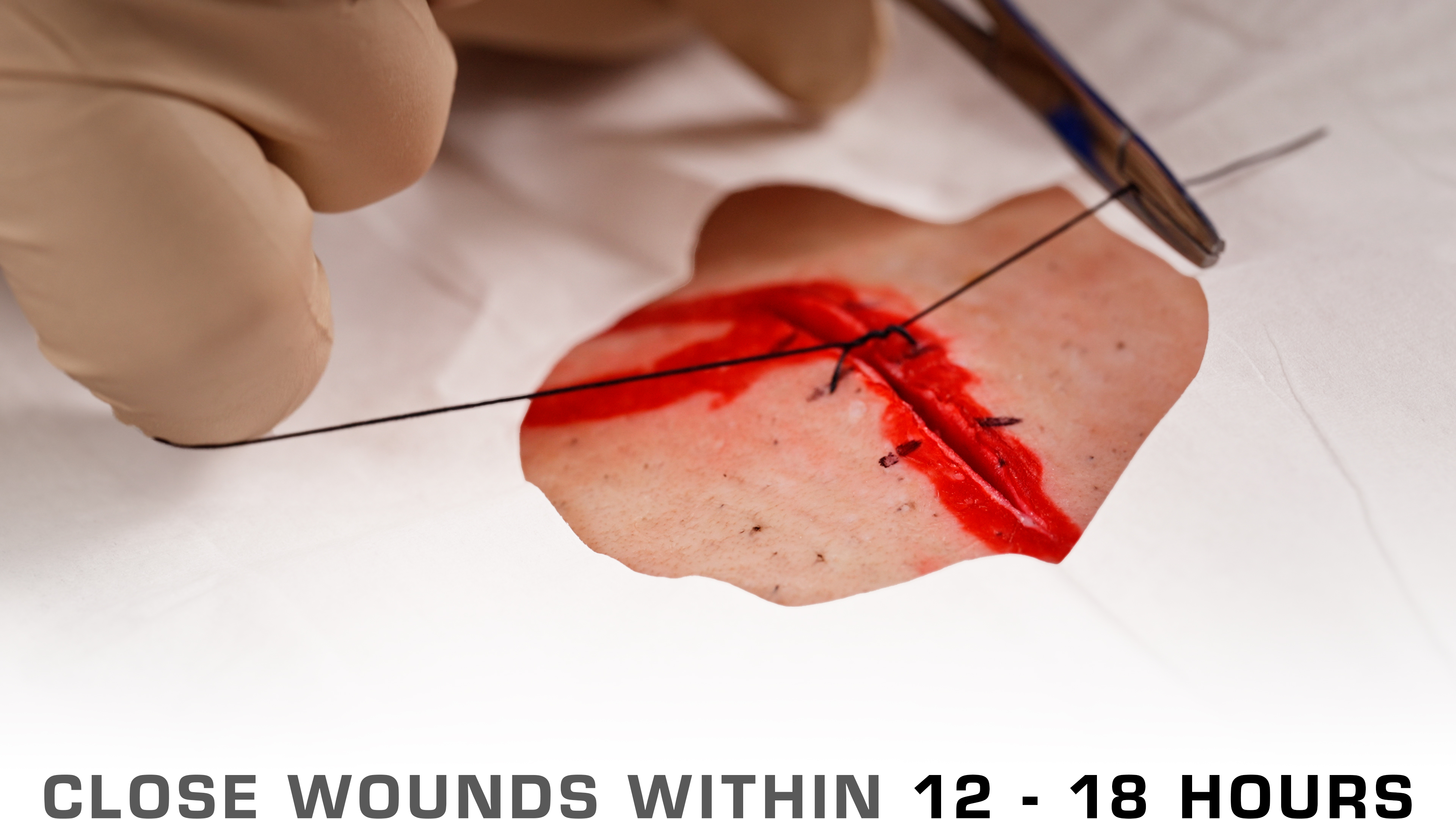
So let's talk about timeline of when to close a wound. In general, you want to close a wound if you're going to do sutures or some sort of a wound closure device, you want to apply that within 12 to 18 hours. Although wounds on the head in general can be closed in about 24 hours.
Evaluating a Wound
So the first thing you want to do when looking at a wound is not only determine how that wound was created, but how deep that wound is. So we're looking at this wound here, which we've created in some pig skin.
We see that there's a minimal amount of bleeding. There's no active bleeding, so the patient's not at risk of bleeding out. So that's good. First things first, we've got hemorrhage control.
The Solution to Pollution is Dillution
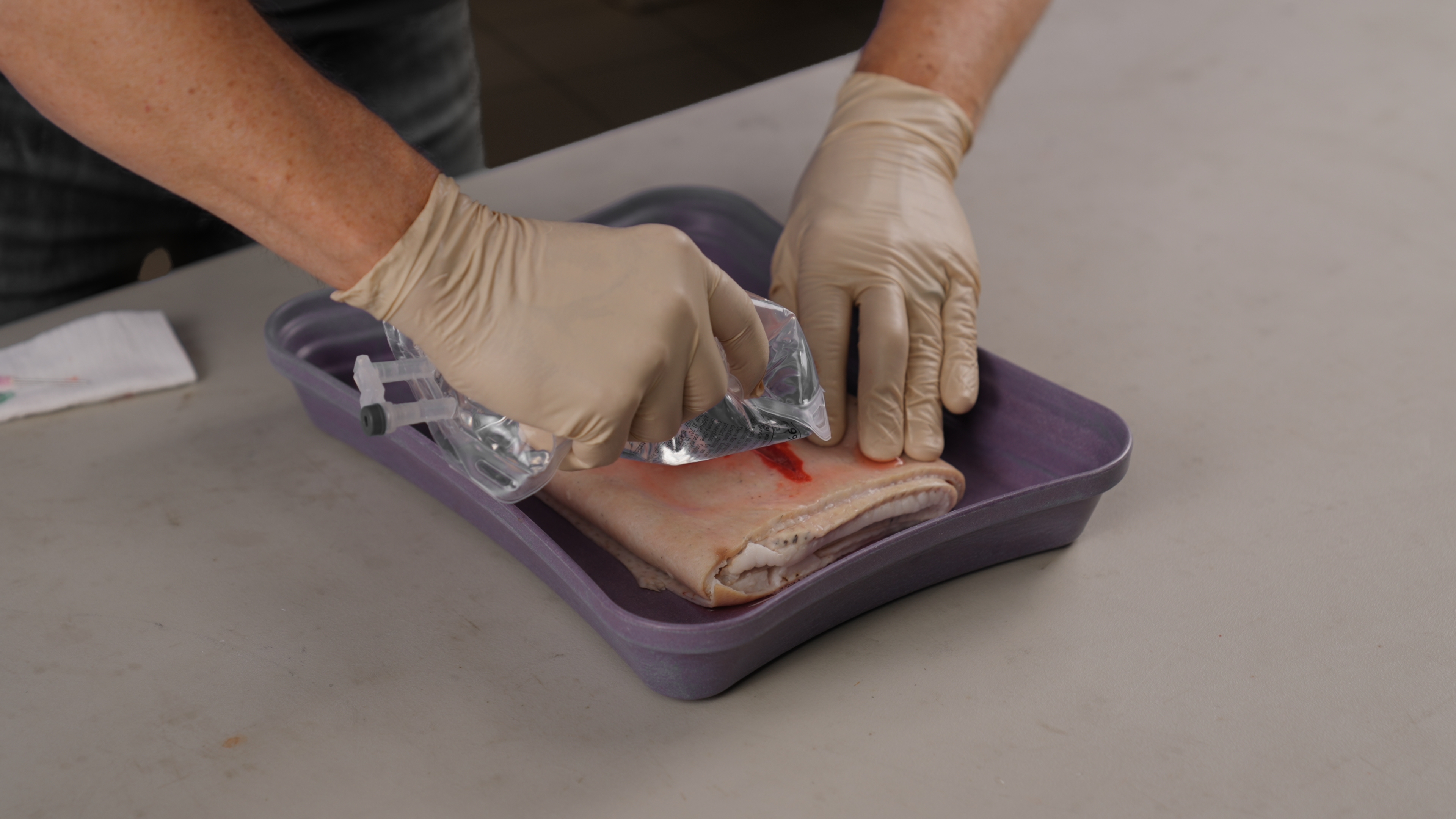
Second thing is, we want to evaluate that wound, and we want to do a good thorough washout. So the solution to pollution is dilution. That's kind of one of the mantra that you learn. The more you can clean it out, the better. What do we clean it out with? What do we wash it out with? Well, I've got a bag of sterile saline. You may not always have that on you. So studies have shown you've got just as good an outcome if you use potable water.
So basically any water that you can drink, whether it's from a water bottle or you've used a filter and used stream or lake water, but you've put it through a filter and it's now something you would drink, that's absolutely fine to wash that wound out.
So how much fluid do we want to use to wash out that wound?
In general, you want to use a minimum of a 100 mL per centimeter of laceration. So here you can see I'm probably less than five centimeters. I've got a 500 mL bag. That should be absolutely fine. More complex wounds, more jagged wounds. Wounds that appear to be dirtier. You're going to want to use more.
You really can't use too much solution when you're washing out a wound. So you really want to irrigate that, get as much water in there as possible and get it out.
High vs. Low Pressure Wash Out
Low Pressure Wash Out
High Pressure Wash Out
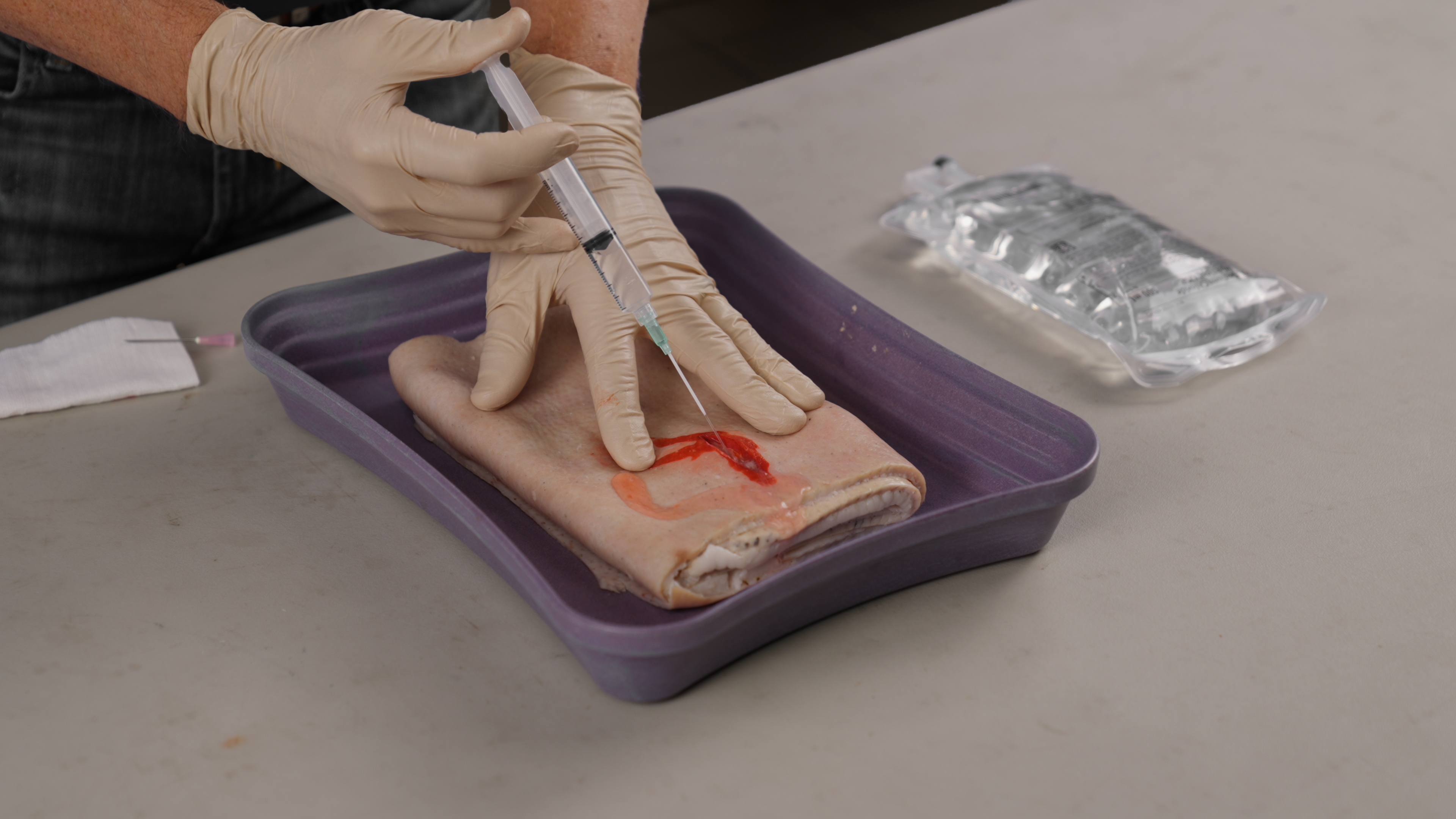
High pressure wash out in general is going to be better than a low pressure wash out. So low pressure would just be poking a few holes in this bag, squeezing it, and getting a nice, steady stream out. High pressure, we're actually going to create that by taking a syringe, I like to have at least a 35 mL syringe and then do a 19 gauge angiocath, and then fill it up, and then as you press out and wash that wound out, then that creates a high pressure flow and you can just do that and repeat over and over and really get into the nooks and crannies of that wound with some good high pressure washout.