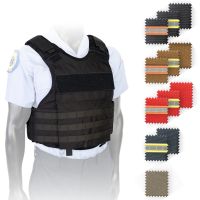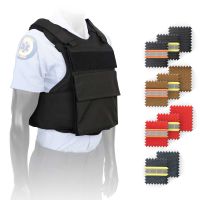
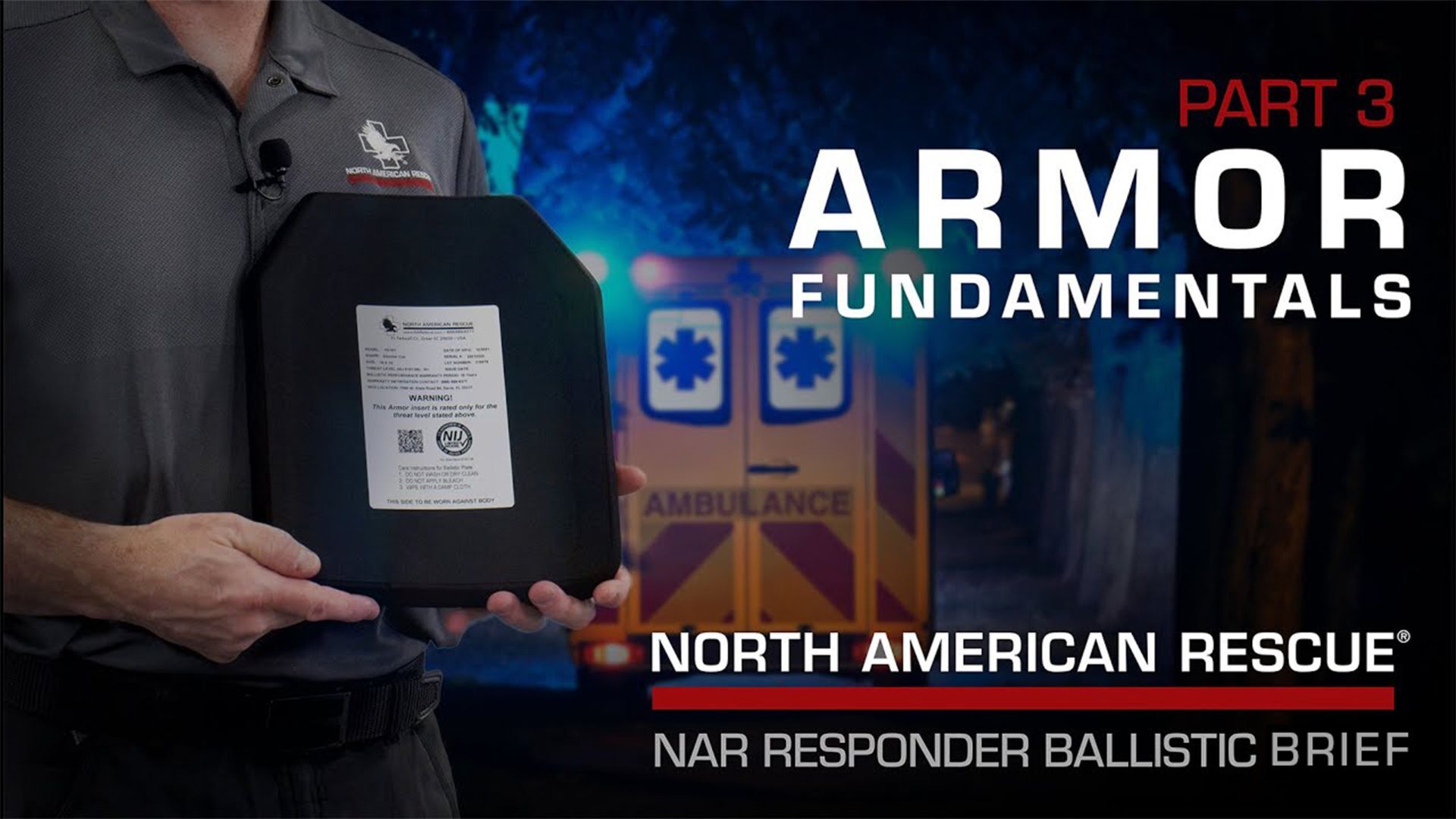

What is body armor, and how is it constructed?
We're going to talk about the primary materials used in the construction of body armor.
- Aramid material (used in soft armor, commonly seen in Kevlar-style vests.)
- UHMWPE: Ultra high molecular weight polyethylene (we just refer to as poly.)
- Steel (used in hard armor)
- Ceramic (used in hard armor)
Soft Armor Vs. Hard Armor
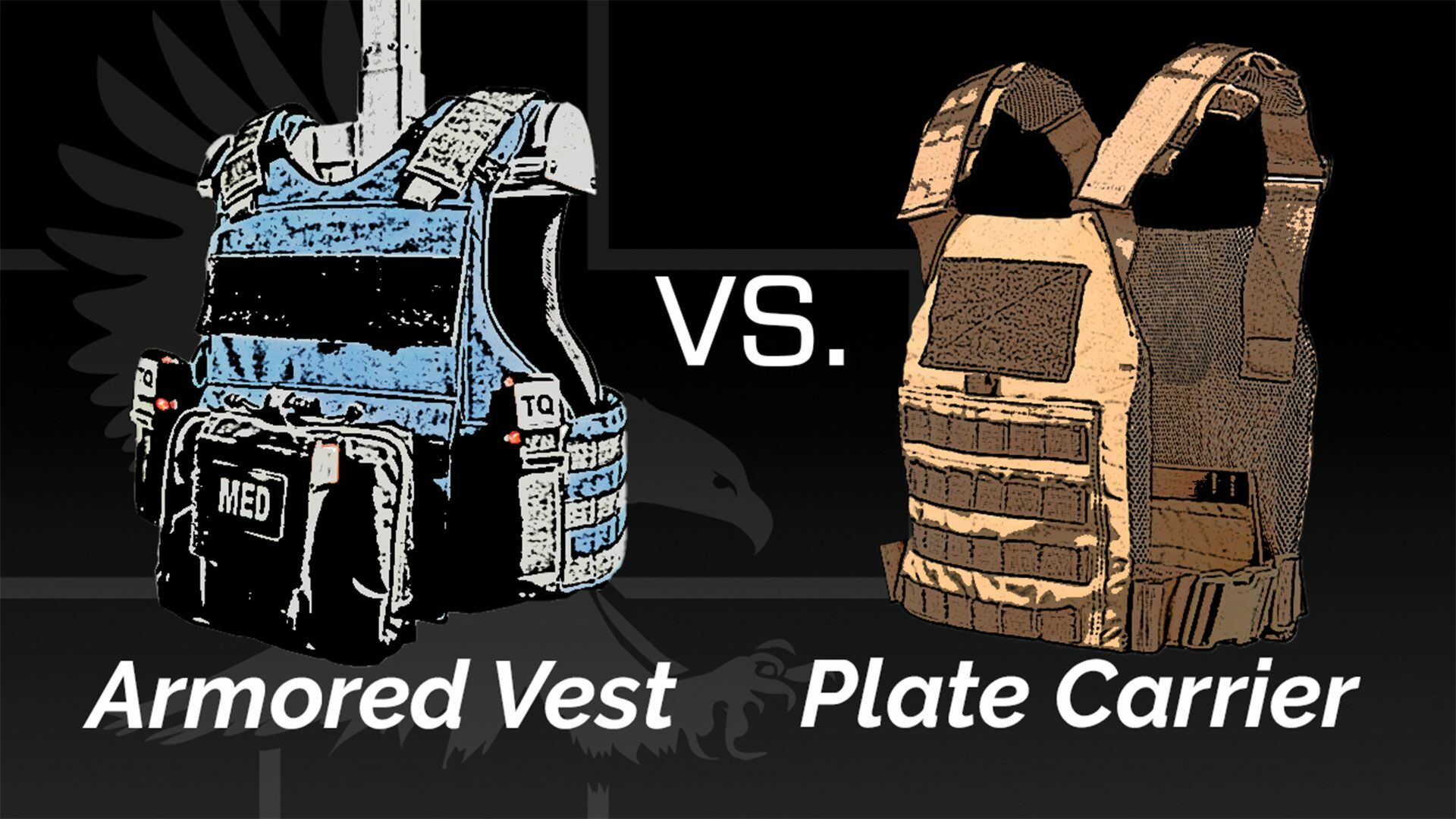
Soft Armor is designed to protect against pistol rounds, but not rifles. Soft armor will not stop a rifle round. Hard armor, the rigid hard plate, is required to stop a rifle round.
Neither are standardly tested against fragmentation. Neither are standardly tested against stabbing or cuts.
What Materials are Used in Body Armor?
So let's talk about what's used in soft armor. This is what's called an aramid material. Aramid is simply a synthetic fiber, which has a very high strength the weight ratio. Now these fibers, as you can see here, are then woven into a sheet, into an actual panel, and then panels are stacked together in a certain fashion to create an armor panel.
The two most commonly used aramid materials used in soft armor are Kevlar and Twaron. Whenever a projectile strikes a soft armor panel, it essentially catches the bullet, it deforms the bullet and catches and then stretches in the direction of energy. Now, the performance of a soft armor panel varies a lot on its construction, how it's layered by changing the orientation of the aramid fibers, and aramid panels it can increase the performance.
Armor companies use different widths and different styles of aramid material placed together, and that can increase the performance of the ballistic panel. The North American Rescue Soft Armor package is made of Twaron and unidirectional Twaron, and it's stacked in a certain orientation that maximizes performance, and yet it's very lightweight.
Polyethylene
Polyethylene is essentially put together just like these aramid fibers, although it has a much higher strength of weight ratio than aramid material as much as 40%. And what they do with this polyethylene is they weave it into a fabric and then often laminate it into sheets or press it in a large hydraulic press, which creates the hard armor rifle plates.
So polyethylene is lighter than steel or ceramic, but it doesn't stop some of the more common rifle rounds that we face. Because of that, a ceramic front face is needed on the front of that polyethylene to stop some of the more common rounds. Whenever a bullet strikes poly, it essentially catches and then deforms the bullet just like an aramid material.
By deforming the bullet, it increases the surface area on the round, which then makes it easier for the layers behind it to stop the projectile.
Steel & Ceramics
Steel is another option for a hard rifle plate. Steel is effective at stopping many rounds, but it is also very heavy. Ceramics are an option. On the front face, we have a ceramic front face on the front of this plate, which is lighter than steel and harder, and has better energy absorption.
Ceramic and steel both function by deforming the bullet or breaking it up into smaller segments, which are then easily caught by the armor material behind it. Rifle plates are a balance. Steel is cheaper, but it's also very, very heavy. Polyethylene is very light, but it does not stop some of the more common rounds.
Hybrid Plates
A compromise between a heavy steel plate or a heavy, full RF3 plate would be something like this North American Rescue plate. What we have here is a hybrid style plate, which is a polyethylene plate that has a ceramic front face. This creates a very lightweight plate at about four pounds. It's very thin, but it also stops some of the more commonly used rifle rounds in some of the armor-piercing rounds that we see on the street. And it gives you a plate that is comfortable. It's light enough that you can wear it every day.
The Shapes and Sizes of Rifle Plates
Let's talk about the shapes and sizes of rifle plates. A standard rifle plate is 10 inches wide by 12 inches long. It's designed to cover the torso, which is what's referred to as the cardiac box where the vital organs lie. Now, a lot of people wonder about the sizing of the plate. The rifle plate is there to protect your vital organs or the cardiac box while you're in a standing position and performing your job duties.
If the plate were too long, it would restrict your range of motion and interfere with your ability to sit down and stand up. A standard rifle plate is 10 inches wide, which is defined by the width of the shoulders. For most people, if it were any wider, it would cause a pinch point at their shoulders and interfere with the ability for their arms to cross the center line.
Plate Shapes
Historically, there have been several different shapes for rifle plates. Square plates limit your shoulder mobility because they cause pinch points at the shoulder, which is why most plates today have an angular cut to them.
SQUARE CUT
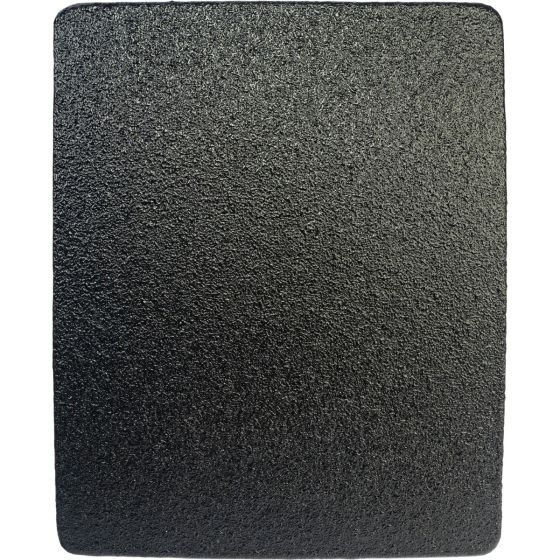
Square plates limit your shoulder mobility because they cause pinch points at the shoulder.
SHOOTER'S CUT
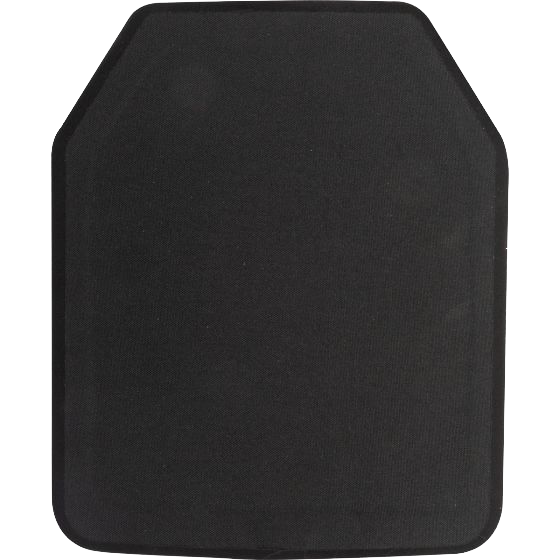
This is what's known as a shooter's cut plate. The shape of the plate has been optimized to allow for a greater range of motion.
SWIMMER'S CUT
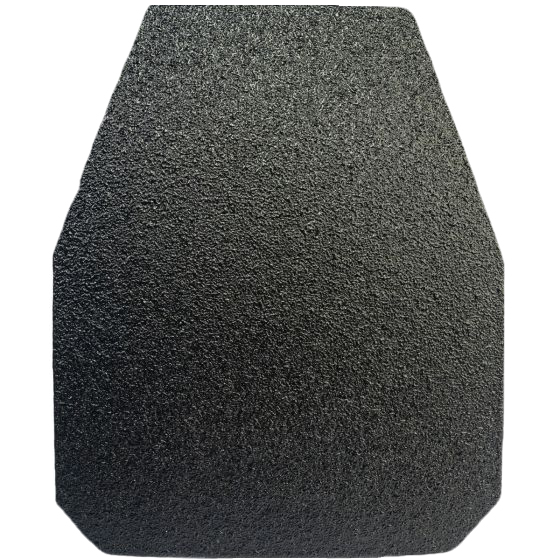
This plate has a deeper angle cut into the top of the base. It allows for a full range of motion. This was designed by the Navy so that operators could wear rifle plates and still get a full range of motion while they're swimming.
Choosing a Ballistic Plate
Everything is a compromise. We want to maximize ballistic protection and still be able to do your job. Most people opt for a shooter's cut plate because it provides maximum protection and yet still allows for the optimal range of motion. The other profile of cut that you may see is known as a SAPPI or an ESAPPI cut, very similar to a shooter's cut, and this was the terminology initially used by the military when they transitioned from a square cut to an angular cut to allow for a greater range of motion.
NAR Hybrid Rifle Plate
North American Rescue offers a shooter's cut plate, which provides the greatest range of motion and the maximum ballistic protection available. The NAR ceramic and polyethylene plate is constructed with a thin ceramic front face and polyethylene. It's a certified NIJ RF2 (Level III+) plate, which means it's been tested for additional special threats.
Standard plate is 10 by 12 shooters cut. It is a standalone plate, it's multi-strike and single curve. It's approximately one inch thick, 4.3 pounds. It's a durable plate and it's sealed from liquids with a protective exterior, and it has a 10-year warranty.
The NIJ special threats include:
- 5.56 X 45mm 55GR M193
- 5.56 X 45mm 62 GR M855 (It's a military round and often referred to as a green tip because it has a steel penetrator in the middle of the projectile.)
- 7.62 X 39MM 123 GR MSC (along with larger Soviet rounds.)
- 7.62 X 39MM 121 BZ API
- 7.62 X 54RMM 148 GR LPS (During the last decade or so, during the ammunition scares, it was often the cheapest and most widely available ammunition on the market.)
Now, the steel projectile will perforate most standard polyethylene plates. This caused the armor industry to essentially create an armor level referred to as a RF2 (III+). This hybrid plate has a ceramic front face that is bonded to polyethylene, and during the NIJ testing, there's actually a drop test that is part of the passing test in which they affix the plate to a large pendulum and it's done in a very controlled fashion, and then essentially dropped against a hard face to ensure that it doesn't crack or fracture in any way.
Because of this durable construction, which we just discussed, these are incredibly durable plates and we often get questions if they're going to be durable enough for a fire department or for EMS use. The answer is absolutely yes. These plates are constructed for SWAT teams for the military as well.
They endure a great deal of abuse, and this drop test ensures that for normal standard usage, these plates are going to be durable and last a very long time.
NAR Steel Rifle Plate
The NAR steel rifle plate special threats through the NIJ include:
- 5.56 X 45mm M193 (up to 3,000 FPS)
- 5.56 X 45mm M855/SS109 (steel penetrator "green tip")
- 7.62 X 39MM 123 GR Steel Core
- 7.62 X 51MM M80 NATO (.308)
The North American Rescue Steel rifle plate is made of AR 500 steel. It's a certified NIJ RF2 (III+) plate, which means it has special threats included. Standard plate is 10 by 12 shooters. Cut. It's a standalone plate, multi-strike, single curve. It's only five millimeters thick. 6.9 pounds. It has a poly coating, which protects it against liquids and also has a 10-year warranty.
Balancing Weight and Protection
Armor is always a compromise, and weight is absolutely a factor, so when you take an account of steel plates such as this, that is almost seven pounds, versus other options which are closer to four pounds, you've almost cut your weight in half, and remember, you're wearing two plates. In the business, we say ounces equal pounds. So anywhere that you can cut weight, if you're going to be wearing ballistic protection on a daily basis, is very important.